
Tire failures can leave Augusta-area fleets facing costly roadside delays, missed deliveries, and unexpected repairs. Understand how tire inspections, proper inflation, and preventive maintenance can help reduce breakdowns and keep commercial trucks operating reliably.

A commercial truck tire failure can turn a routine delivery into hours of unexpected downtime. Along busy routes around Augusta, worn tread, improper inflation, and overlooked tire damage can leave trucks stranded when they should be moving freight. Many of these problems develop gradually, giving fleet operators opportunities to address them before a roadside breakdown occurs.
Why Do Tire Problems Cause So Much Fleet Downtime?
Commercial truck tire failures can interrupt deliveries, delay drivers, and create expenses beyond the cost of replacing a damaged tire. A flat tire or blowout may require roadside assistance, disrupt scheduling, and potentially damage nearby wheel-end or vehicle components.
For fleets operating along I-20, I-520, and surrounding Augusta-area routes, even a single tire-related breakdown can affect multiple deliveries or scheduled jobs.
Common causes of unexpected tire downtime include:
- Underinflated tires: Excessive flexing generates heat and can damage the tire's internal structure.
- Worn tread: Reduced tread depth limits tire serviceability and may affect traction.
- Road debris: Nails, metal fragments, and other objects can puncture commercial tires.
- Uneven tire wear: Alignment, suspension, and inflation problems can accelerate deterioration.
- Overloaded tires: Excessive weight increases stress on the tire casing and internal components.
- Neglected tire damage: Sidewall injuries, exposed cords, or bulges may develop into serious failures.
Regular inspections and timely commercial truck tire repair can help fleets address these concerns before they lead to more disruptive roadside problems.
How Does Proper Tire Inflation Help Prevent Roadside Breakdowns?
Commercial truck tire pressure maintenance is one of the most important parts of preventing premature tire damage. Underinflation increases sidewall flexing, which generates heat and places additional stress on internal tire components.
Overinflation presents different concerns, potentially affecting the tire's contact with the road and contributing to irregular wear.
Maintaining the correct pressure matters for several reasons:
- Heat management: Proper inflation reduces excessive flexing and heat buildup.
- Tread life: Correct pressure helps distribute loads across the tire as designed.
- Fuel efficiency: Underinflation increases rolling resistance and can increase fuel consumption.
- Load capacity: Inflation must support the weight carried by each tire.
- Casing preservation: Avoiding prolonged underinflation helps protect the tire's internal structure.
The relationship between tire inflation and fuel economy demonstrates why pressure maintenance affects operating expenses beyond tire replacement.
Fleet managers should establish inflation targets based on tire manufacturer load-and-inflation tables, actual axle loads, and the vehicle's specifications. Pressure checks should be performed on cold tires using an accurate commercial tire gauge.
A tire that repeatedly loses pressure also needs further inspection. Adding air may temporarily restore its pressure without addressing a puncture, leaking valve, damaged wheel, or other underlying problem.
What Tire Wear Patterns Should Fleet Managers Watch For?
Uneven commercial truck tire wear often provides early evidence of problems involving inflation, alignment, suspension, or wheel-end components.
A tire can remain inflated while developing wear that eventually makes replacement necessary. Identifying unusual patterns during routine inspections helps operators investigate contributing mechanical problems before another set of tires wears prematurely.
Common Heavy-Duty Truck Tire Wear Patterns
- Center tread wear: May indicate excessive inflation for the tire's operating load or other application-related conditions.
- Shoulder wear: Can develop from underinflation, excessive loading, or certain operating conditions.
- One-sided wear: May point toward alignment issues or worn steering and suspension components.
- Cupping or scalloping: Can indicate suspension, wheel balance, or other mechanical concerns.
- Feathered tread edges: May suggest improper alignment or tire scrub.
- Localized flat spots: Can result from wheel lockup, braking events, or prolonged stationary conditions.
Understanding tire construction and wear also helps explain why visible damage can affect the underlying casing, belts, and other structural components.
Wear patterns provide diagnostic clues rather than definitive answers. A technician should evaluate tire condition alongside the truck's alignment, suspension, inflation history, and operating demands.
How Often Should Commercial Truck Tires Be Inspected?
Fleet tire inspections should be part of routine pre-trip checks, scheduled maintenance, and post-incident evaluations.
Drivers often notice the first signs of developing problems because they see the vehicle between maintenance appointments. Giving them a consistent inspection checklist makes it easier to identify concerns and report them before the truck leaves the yard.
Daily Commercial Truck Tire Inspection Checklist
Before dispatch, drivers should examine:
- Tread condition: Look for excessive wear, cuts, embedded objects, and irregular tread patterns.
- Inflation: Check pressure using the fleet's established procedures and investigate visibly low tires.
- Sidewalls: Inspect for bulges, cracking, exposed cords, and impact damage.
- Valve stems: Look for damage, missing caps, or evidence of leakage.
- Dual tire assemblies: Check for debris between tires, mismatched tire dimensions, and abnormal spacing.
- Wheel condition: Identify visible rim damage, loose or missing fasteners, and other wheel-related concerns.
- Previous repairs: Watch for recurring air loss or deterioration around previously damaged areas.
A visual inspection alone cannot confirm that a tire has the correct inflation pressure. Accurate measurements and regular pressure monitoring remain necessary.
Fleet maintenance teams should also document recurring tire problems by vehicle and wheel position. Repeated failures in the same location may indicate a mechanical issue or operating condition that needs attention.
When Should a Commercial Truck Tire Be Repaired or Replaced?
Not every damaged tire requires replacement, but not every puncture can be repaired safely.
Heavy-duty truck tire repair depends on the tire's condition, injury location, damage severity, and applicable manufacturer repair criteria. A tire that has operated significantly underinflated may have internal structural damage that cannot be identified from its exterior alone.
Tire Repair May Be Appropriate When:
- The puncture falls within an approved repairable area.
- The injury meets the manufacturer's repair limitations.
- The casing shows no disqualifying structural damage.
- The tire can be inspected internally and repaired using an approved procedure.
Tire Replacement May Be Necessary When:
- Sidewall or shoulder damage falls outside repair limits.
- The casing contains exposed or damaged structural cords.
- Internal damage results from extended underinflated operation.
- The tire has excessive wear, separation, or other unsafe conditions.
Repair eligibility must be confirmed through the appropriate inspection process. Simply plugging an accessible puncture without evaluating the tire's condition may leave serious damage undetected.
For fleets managing multiple vehicles, consistent repair-versus-replacement decisions help control expenses without sacrificing safety.
Can Tire Retreading Help Augusta-Area Fleets Control Costs?
Tire replacement expenses can accumulate quickly for fleets operating multiple trucks and trailers. Commercial truck tire retreading provides another option when worn tires still have structurally sound casings.
The process involves inspecting an eligible casing, removing the worn tread, applying new tread material, and completing the required curing and quality checks.
Retreading may offer several advantages:
- Lower tire acquisition costs compared with purchasing new tires
- Extended service life for qualifying commercial tire casings
- Reduced material waste through casing reuse
- More flexible long-term tire replacement planning
However, casing condition determines whether retreading remains practical. Improper inflation, severe impacts, and neglected tire damage can make an otherwise valuable casing unsuitable for reuse.
Langford Tire Service explains the inspection process, benefits, and limitations in its article covering commercial tire retreading benefits.
For fleet managers, preserving tire casings through consistent maintenance can support better tire cost management over time.
What Is the Real Cost of Tire-Related Fleet Downtime?
A roadside tire failure creates expenses that extend beyond the tire itself. Lost operating time can affect driver schedules, delivery commitments, equipment availability, and customer relationships.
The cost of commercial fleet downtime generally includes direct expenses and less visible operational losses.
Potential costs include:
- Emergency roadside tire service
- Replacement tires and related repairs
- Driver wages during unproductive time
- Delayed deliveries and disrupted schedules
- Additional dispatch or vehicle coordination
- Lost revenue opportunities when equipment remains unavailable
Evaluating the true cost of vehicle downtime helps explain why fleet maintenance decisions should account for lost productivity alongside direct repair expenses.
A scheduled tire replacement may require some planned downtime, but it gives fleet managers greater control over timing, vehicle availability, and operating disruptions.
How Can Augusta Fleets Build a Better Tire Maintenance Program?
An effective fleet tire maintenance program combines driver inspections, scheduled service, accurate maintenance records, and timely repair decisions.
Rather than treating every tire failure as an isolated incident, fleet managers can identify recurring problems and adjust maintenance practices accordingly.
Practical priorities include:
- Establish inflation standards: Use approved pressures for each tire application and operating load.
- Document tire conditions: Record tread measurements, damage, and unusual wear patterns.
- Investigate repeat failures: Review alignment, suspension, loading, and wheel-end conditions.
- Schedule preventive service: Address worn or damaged tires before they interrupt planned routes.
- Track tire performance: Monitor tire life, repair history, and recurring replacement costs.
- Prepare for roadside emergencies: Keep accurate tire size, wheel position, vehicle location, and service contact information available.
For operators traveling between Evans, Augusta, and surrounding communities, having a dependable tire service provider can also simplify maintenance coordination and unexpected roadside repair needs.
Reduce Tire Downtime With Professional Service
Tire-related breakdowns are not always avoidable, but consistent inflation checks, tread inspections, and timely repairs can reduce the risk of preventable failures. A well-managed tire program also helps fleets make better decisions about replacement timing, casing preservation, and maintenance costs.
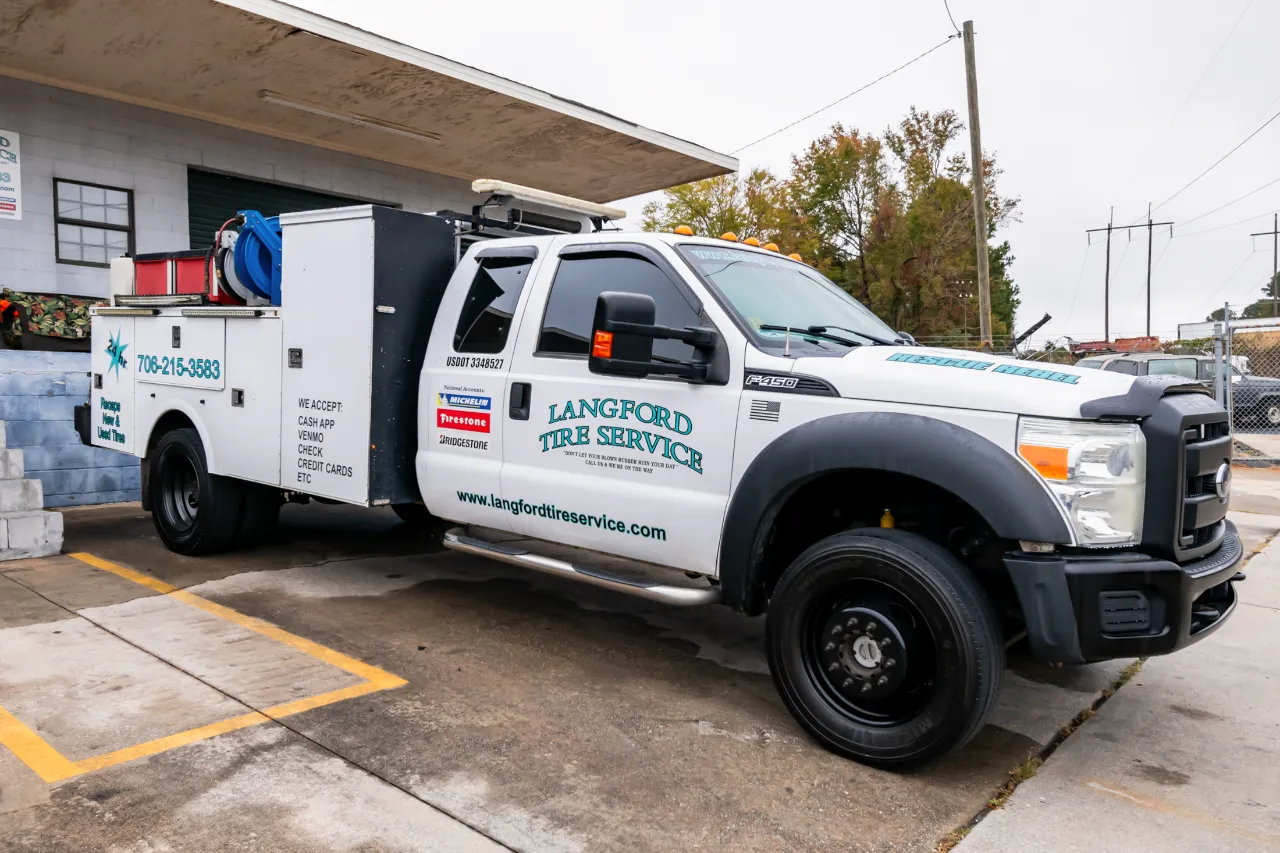
Langford Tire Service provides commercial truck tire repair, replacement, and 24/7 mobile tire service throughout Evans, Augusta, and the surrounding area. Their team supports fleet operators and owner-operators with tire-related maintenance and roadside service needs.
News & Articles
Read About The Latest in Industry
Here, you'll find regular articles covering a wide range of topics related to diesel repair, maintenance, and troubleshooting.




Don't Just Take Our Word For It.

Contact Langford Tire Service
Based out of Evans, Georgia, Langford Tire Service brings our mobile diesel repair and maintenance services to you throughout the Augusta Metropolitan Area.